Why Nails Split and Peel, and What Actually Helps
Peeling, splitting nails are common, and knowing what wears them down is the first step toward gentler care and realistic expectations.
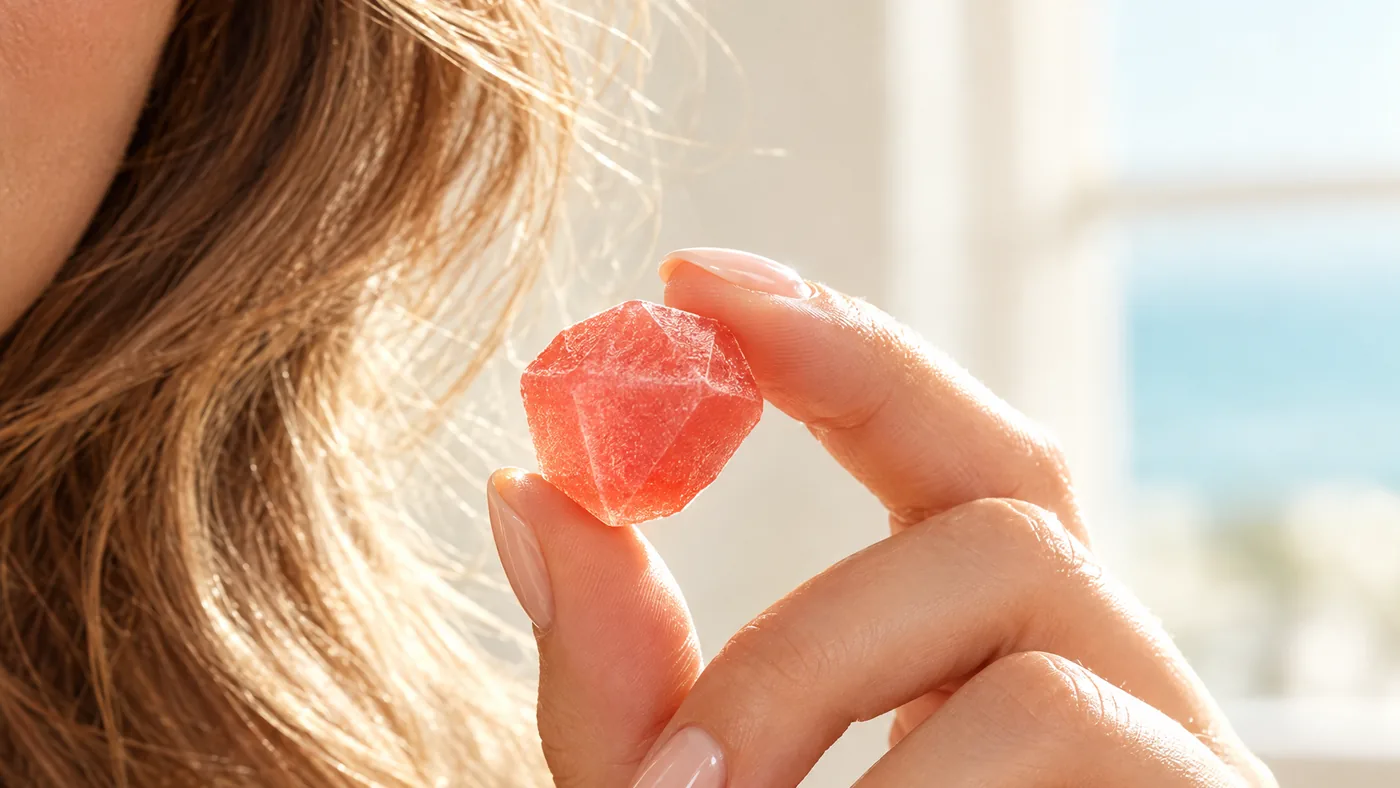
Nails that peel into thin layers or split at the tip are among the most common beauty frustrations. Brittle nails affect up to 20% of people, especially women over 501. Many of the everyday things that wear nails down, such as water, harsh products and polish removal, are things you can work around15. Here is what is going on, what helps, and an honest look at the research on supplements.
What brittle nails look like
Brittle nails split, flake or crumble, and they can become soft and lose their flexibility1. Dermatologists describe two main patterns, with long names for fairly simple things:
- Peeling in layers (onychoschizia). The free edge of the nail separates into fine horizontal layers1. It shows up almost only on fingernails and is typical in people who wash their hands very often1.
- Splitting and ridges (onychorrhexis). Shallow grooves and splits run lengthwise along the surface of the nail1. It is especially common in middle-aged women1.
If you only see faint lines running the length of your nails, take heart: the AAD says these are common and usually nothing to worry about6.
Why nails split and peel
The layers of a nail are held together by natural fats between its cells, and the nail also stores water. When either is disturbed, nails become more fragile1. The usual culprits:
- Frequent wetting and drying. Too much water exposure can weaken nails and cause them to split, peel or break3. Nails lose water faster than skin does, so constant washing and sanitizing can leave them dry and brittle5.
- Harsh soaps, detergents and solvents. Dermatologists advise limiting contact with water and detergents when nails are fragile1, and exposure to solvents, for example at work, can dissolve the fats that hold nail cells together1.
- Polish, removers and long nails. One dermatology review notes that all methods of removing nail products damage healthy nails1. A Cleveland Clinic dermatologist adds that long nails and regular use of nail cosmetics make splits and breaks more likely5.
- Using nails as tools. Opening cans or prying things with your nails can cause chipping, splitting or lifting3.
- Time. Some increase in nail fragility is a normal part of aging1. Nails also grow more slowly as we get older, so each one spends longer exposed to dry air, water and sanitizers5.
Less often, brittle nails can be a sign of a health issue such as a fungal infection, psoriasis, a thyroid condition or not getting enough protein, iron or B vitamins5. That is one reason lasting changes deserve a professional look.
Everyday habits that help
Gentle daily habits are the natural place to start. These come up again and again in dermatologist advice:
- Wear gloves for wet work. Gloves for cleaning and washing dishes protect nails from too much water3. One review suggests cotton gloves inside rubber ones2.
- Moisturize nails and cuticles. Moisturize after you wash your hands3 and after you trim, since dry nails split more easily4. Moisturizers with occlusives such as petrolatum or lanolin, or humectants such as glycerin, can improve nail strength2, and a Cleveland Clinic dermatologist suggests a heavy hand cream at bedtime5.
- File in one direction. Filing back and forth can weaken your nails4.
- Keep them shorter for now. Nails dry out faster when they are not kept short1, and if they are breaking, a Cleveland Clinic dermatologist suggests clipping or filing them shorter for a while5.
- Go easy on removers. One review suggests using nail polish remover no more than twice a month and choosing acetate-based formulas over acetone-based ones2.
- Leave your cuticles alone. Cuticles protect the nail root, and cutting them or pushing them back makes it easier for germs to cause an infection4.
What the research says about biotin
Biotin, also called vitamin B7, has been studied for brittle nails, and the evidence is encouraging but thin7. In an older open study, 71 people with brittle nails took 2.5 mg of biotin a day. Of the 45 whose results were assessed, 41 (91%) showed a marked improvement in nail firmness and hardness after an average of about 5.5 months7. In another small study, 22 of 35 people with brittle nails showed clinical improvement7.
Those studies have real limits. A dermatology review describes them as small and not well controlled, with one based on a retrospective survey1. Another review points out that supplement makers are not required to prove effectiveness before selling a product, and calls for more randomized, double-blind, placebo-controlled studies7.
One safety note: biotin can interfere with some lab tests, including troponin, a test used to help diagnose a heart attack7. If you take biotin, tell your doctor and the lab before any blood work.
What the research says about collagen peptides
A published study of collagen peptides for brittle nails is worth knowing about. In it, 25 people took 2.5 g of VERISOL® bioactive collagen peptides once a day for 24 weeks8. Nail growth rate increased by 12%, the frequency of broken nails fell by 42%, and 64% of participants showed an overall clinical improvement8.
It is an early signal, not proof. The study was open-label and single-center, with no placebo group, so everyone knew they were taking collagen8. A later review that received no outside funding notes its biases, including the lack of blinding, and calls for larger, more rigorous studies7. Two of the six authors were affiliated with a collagen research institute8. And one review advises that collagen peptides are not recommended during pregnancy or breastfeeding7.
If you like a dedicated daily step from within, our Collagen Gummies are made with VERISOL® collagen peptides, and Hair·Skin·Nails Gummies offer a broader blend. The study above looked at the ingredient, not our products, so either one is simply an optional extra.
When to see a dermatologist
Brittle nails usually do not need a doctor visit5, but some nail changes do. Book a visit with a board-certified dermatologist if you notice:
- A new or changing dark streak in a nail. Not every streak is melanoma, but it is always worth having one examined6.
- A nail lifting away from the skin underneath, which often looks white6, or grooves or separation in the nail plate5.
- Redness, swelling or soreness around a nail, which can mean an infection65.
- Nails that thicken or turn yellow, which can point to a fungal infection5, or any other change in color6.
- A change in shape, such as thin nails that dip in the middle like a spoon, which can be linked to low iron, or nails that start to curve downward6.
- Any nail that changes, swells or hurts3.
If you have diabetes or poor circulation, the AAD says it is especially important to seek treatment for any nail problem3.
The takeaway
Peeling and splitting nails are common, and everyday wear from water, harsh products, polish removal, rough handling and time plays a big part. Gloves, moisturizer, filing in one direction, shorter nails, gentle removers and untouched cuticles make a simple foundation. Biotin and collagen peptides have small, encouraging studies but no firm proof, so treat them as optional and give your nails months, not days. And any change in a nail's color, shape or comfort is worth showing a dermatologist.
This article is for general information and is not medical advice.
Sources
- Pathogenesis, Clinical Signs and Treatment Recommendations in Brittle Nails: A Review (Chessa MA, Iorizzo M, Richert B, et al. Dermatol Ther (Heidelb). 2019;10(1):15-27). Dermatology and Therapy (Springer), via PubMed Central (NIH). Source
- Natural Treatment Options for Nail Disorders (Baboun D, Yaghi M, Keri JE, Morrison BW. Skin Appendage Disord. 2023;10(2):83-91). Skin Appendage Disorders (Karger), via PubMed Central (NIH). Source
- 11 dermatologists' tips for healthy nails. American Academy of Dermatology. Source
- How to trim your nails. American Academy of Dermatology. Source
- What Causes Brittle Nails and How To Treat Them. Cleveland Clinic. Source
- 12 nail changes a dermatologist should examine. American Academy of Dermatology. Source
- Nail Supplements: When, How, and Why? (Zaraa I, Richert B. Skin Appendage Disord. 2024;11(2):176-181). Skin Appendage Disorders (Karger), via PubMed Central (NIH). Source
- Oral supplementation with specific bioactive collagen peptides improves nail growth and reduces symptoms of brittle nails (Hexsel D, Zague V, Schunck M, Siega C, Camozzato FO, Oesser S. J Cosmet Dermatol. 2017;16(4):520-526). Journal of Cosmetic Dermatology (Wiley), via PubMed. Source
For general information only, not medical advice. If you are pregnant, nursing, taking medication or have a medical condition, please check with your doctor before use.
Keep reading

A Calm Nightly Ritual for Hair and Skin
A few gentle, unhurried minutes each evening are enough to clear away the day and care for your skin and hair before sleep.
Read →
The Hair Growth Cycle: Why Real Change Takes About 90 Days
Hair runs on a slow, staggered clock, and knowing how it works makes patience, consistency and progress photos much easier.
Read →
Biotin for Hair: What the Research Actually Says
Biotin has a big reputation in beauty. The evidence is more modest, and there is one safety point worth knowing before your next blood test.
Read →