Your Skin Barrier, Explained: Signs, Stressors and Gentle Care
Your skin barrier is a thin wall of cells and lipids, and the kindest thing you can do for it is usually to do a little less, more gently.
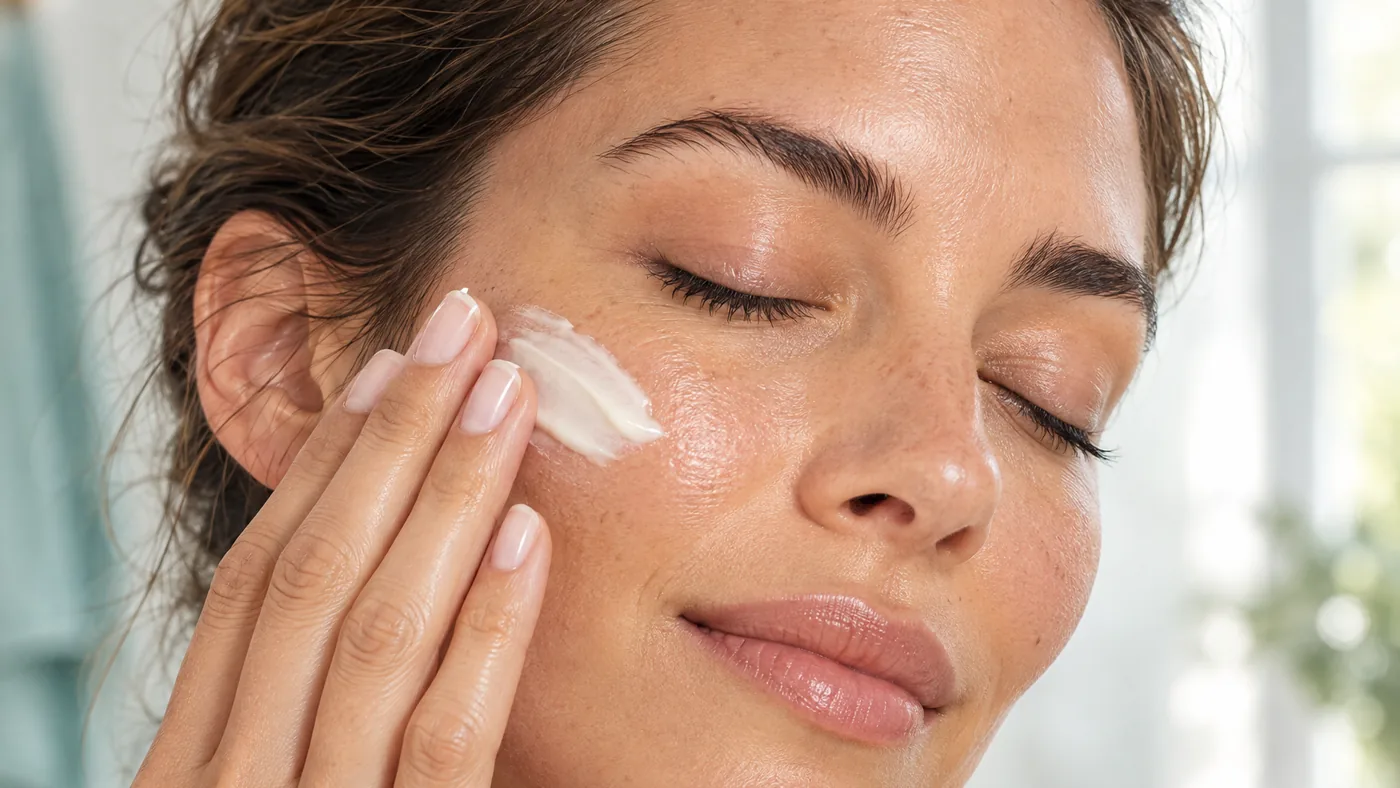
"Skin barrier" has become one of the most talked-about phrases in skin care, and for good reason. When your barrier is comfortable, skin tends to look and feel calm. When it is stressed, even products you love can start to sting1. The good news is that caring for it is mostly about doing less, more gently.
What your skin barrier is
Your skin barrier is part of the stratum corneum, the very top layer of your skin. A Cleveland Clinic dermatologist describes it as a layer of dead cells, lipids, proteins and fats that works to keep water in and to keep chemicals and infectious bacteria out1.
The easiest way to picture it is a brick wall1:
- The bricks are corneocytes, the tough skin cells that make up the wall1.
- The mortar is a blend of natural lipids, such as ceramides, cholesterol and fatty acids, that fills the gaps between those cells1.
That mortar matters. A review in Clinical Medicine & Research explains that losing these lipids between the cells damages the skin's water barrier and leads to dry skin2. Another Cleveland Clinic dermatologist adds that aging and certain skin conditions, such as eczema, involve lower ceramide levels, which can leave skin dehydrated or itchy3.
Signs your barrier is stressed
A stressed barrier usually tells you how it feels. Signs to notice include:
- Stinging, especially when you apply skin care products1.
- Redness and irritation, or skin that feels tender or sensitive1.
- Dry, flaky or rough patches, sometimes with itching15.
- A tight feeling after washing. Cleanser removes some of your skin's natural oils and moisturizers along with the dirt, and a dermatologist notes that skin will often feel tight afterward, especially with a medicated cleanser4.
If any of these linger, the section on seeing a dermatologist below is worth a read.
What wears it down
Many everyday habits chip away at the mortar. The most common:
- Hot water. One dermatologist compares the barrier to butter on a knife: under hot water it melts away, and hot water does the same to your skin's healthy natural oils1.
- Over-cleansing and harsh soaps. Soap can strip your skin's natural oils, and lingering over your cleanser does not help: there is no benefit to massaging it in longer, and the fatty layer of your barrier can begin to break down1.
- Harsh scrubs and over-exfoliating. Scrubbing and over-exfoliating are among the habits that can break down the barrier1, and the AAD notes that over-exfoliation can leave skin red and irritated6.
- Too many actives at once. The AAD cautions that using several anti-aging products at the same time can irritate your skin7. Exfoliating while using retinol or benzoyl peroxide may also worsen dry skin6.
- Dry air. Cold, dry winter air, hot and dry climates, and dry indoor air from heating or cooling systems can all contribute to dry skin5.
Gentle habits that help
The dermatologist advice here comes down to one idea: be very gentle when you care for your skin1. In practice, that looks like this:
- Choose lukewarm water. Lukewarm is best for most people, while hot water can strip the skin barrier and lead to more dryness4.
- Use a mild cleanser and your fingertips. Look for a soap-free, fragrance-free cleanser made for sensitive skin1. Apply it with your fingers, since a washcloth, loofah or brush can be harsh, then pat dry instead of rubbing4.
- Moisturize while skin is still damp. The AAD advises applying moisturizer while your skin is still damp after a shower or bath8, and a Cleveland Clinic dermatologist suggests doing it within three minutes of showering or washing your face3.
- Introduce one active at a time, and patch test first. Start with one product7. To test it, the AAD suggests applying it twice a day for seven to 10 days to a quarter-sized spot, such as the underside of your arm or the bend of your elbow; if there is no redness, itching or swelling, go ahead9. Some ingredients, such as retinol and glycolic acid, can still cause temporary irritation9. If you are weighing your options, our guide to bakuchiol vs. retinol walks through the differences.
- Wear sunscreen every day. The AAD recommends a broad-spectrum, water-resistant sunscreen with an SPF of 30 or higher8, and the best one is the one you like, can afford and will actually use every day1.
- Add moisture to the air. If your home is dry, the AAD suggests a humidifier, cleaned regularly to prevent mold8.
What your moisturizer is actually doing
Most moisturizers combine three kinds of ingredients, each with a different job2:
- Humectants attract water into the outer layer of skin, both from deeper layers of skin and from humid air2. Glycerin, hyaluronic acid, urea and panthenol are examples2.
- Emollients are mostly lipids that fill the gaps between skin cells, helping skin feel smoother, softer and more flexible2. Ceramides, cholesterol and fatty acids, the same lipids found in your barrier's mortar, are common skin care ingredients1.
- Occlusives form a water-repelling layer over the skin that slows water loss2. Petrolatum is the classic example, and lanolin, mineral oil and dimethicone also belong here2.
The combination matters. On their own, humectants can increase water loss, because the water they draw up toward the surface can evaporate, which is why they are often paired with occlusives2. Occlusives also work best on slightly damp skin2, one more reason to moisturize right after washing. If your skin runs dry, the AAD notes that creams and ointments add more moisture than lotions8. If you like a simple finishing step, our Daily Face Cream is a silky option for morning and night.
When to see a dermatologist
Gentle habits go a long way, but some skin needs more. Conditions such as eczema, rosacea and psoriasis are associated with a poor skin barrier, and in those cases it is best to work with a dermatologist1. Consider booking a visit with a board-certified dermatologist if:
- Your skin stays dry after you have tried these tips. Overly dry skin may be due to an underlying condition, such as atopic dermatitis or psoriasis8.
- You have an itchy rash, especially one that comes and goes. It can be a sign of contact dermatitis, which develops when something that touches your skin irritates it or causes an allergic reaction10.
- A product causes a severe reaction that cool compresses or petroleum jelly do not relieve, or you cannot pinpoint what is irritating your skin. A dermatologist may suggest a medical test called patch testing to find the cause9.
- Anything you apply, including moisturizer, causes burning, stinging or irritation. The AAD says to tell your dermatologist8.
The takeaway
Your skin barrier is a wall of cells held together by lipids, and it does its best work when you treat it gently. Wash with lukewarm water and a mild cleanser, moisturize while your skin is still damp, add new actives one at a time after a patch test, and wear sunscreen every day. If irritation lingers or a rash appears, a board-certified dermatologist is the right next step.
This article is for general information and is not medical advice.
Sources
- Signs Your Skin Barrier Is Damaged (How To Tell if Your Skin Barrier Is Damaged and What To Do About It). Cleveland Clinic. Source
- The Role of Moisturizers in Addressing Various Kinds of Dermatitis: A Review (Purnamawati S, Indrastuti N, Danarti R, Saefudin T; Clin Med Res. 2017;15(3-4):75-87). Clinical Medicine & Research, via PubMed Central (NIH). Source
- What Do Ceramides Do for Your Skin?. Cleveland Clinic. Source
- A Guide on How to Wash Your Face. Cleveland Clinic. Source
- Dry skin. MedlinePlus Medical Encyclopedia (U.S. National Library of Medicine). Source
- How to safely exfoliate at home. American Academy of Dermatology. Source
- How to maximize results from anti-aging skin care products. American Academy of Dermatology. Source
- Dermatologists' top tips for relieving dry skin. American Academy of Dermatology. Source
- How to test skin care products. American Academy of Dermatology. Source
- Eczema types: Contact dermatitis overview. American Academy of Dermatology. Source
For general information only, not medical advice. If you are pregnant, nursing, taking medication or have a medical condition, please check with your doctor before use.
Keep reading
Why Nails Split and Peel, and What Actually Helps
Peeling, splitting nails are common, and knowing what wears them down is the first step toward gentler care and realistic expectations.
Read →
A Calm Nightly Ritual for Hair and Skin
A few gentle, unhurried minutes each evening are enough to clear away the day and care for your skin and hair before sleep.
Read →
The Hair Growth Cycle: Why Real Change Takes About 90 Days
Hair runs on a slow, staggered clock, and knowing how it works makes patience, consistency and progress photos much easier.
Read →