How to Build a Simple Wellness Ritual, Outside and Within
A few unhurried minutes a day, built around habits you already have.

The routine that works best is rarely the most elaborate one. It is the one you can keep. A handful of thoughtful steps, repeated, will carry you further than a crowded shelf you reach for only on good weeks.
Here is a simple framework for hair, skin and beauty supplements that fits into a few minutes a day.
Wash day: cleanse, condition, and a little extra care
How often you wash depends on your hair. The American Academy of Dermatology suggests letting oiliness guide you: if you have straight hair and an oily scalp, you may want to shampoo daily, while dry, textured, curly or thick hair can go longer between washes.1
Shampoo the scalp
Concentrate shampoo on your scalp rather than the full length of your hair. That way you wash away built-up product, oil and dead skin without drying your hair too much.1
Condition every time
Follow every wash with conditioner, which moisturizes, detangles and makes hair easier to manage.1 If your hair is fine or straight, apply it to the ends. If it is dry or curly, work it through the full length.1
A weekly mask
Once a week, trade your conditioner for a richer mask and give it a few unhurried minutes before you rinse. Think of it as the slow, indulgent part of your week.
An occasional scalp scrub
Every so often, a gentle scalp scrub before you shampoo can make wash day feel like a reset. Use light fingertip pressure, and skip it whenever your scalp feels tender.
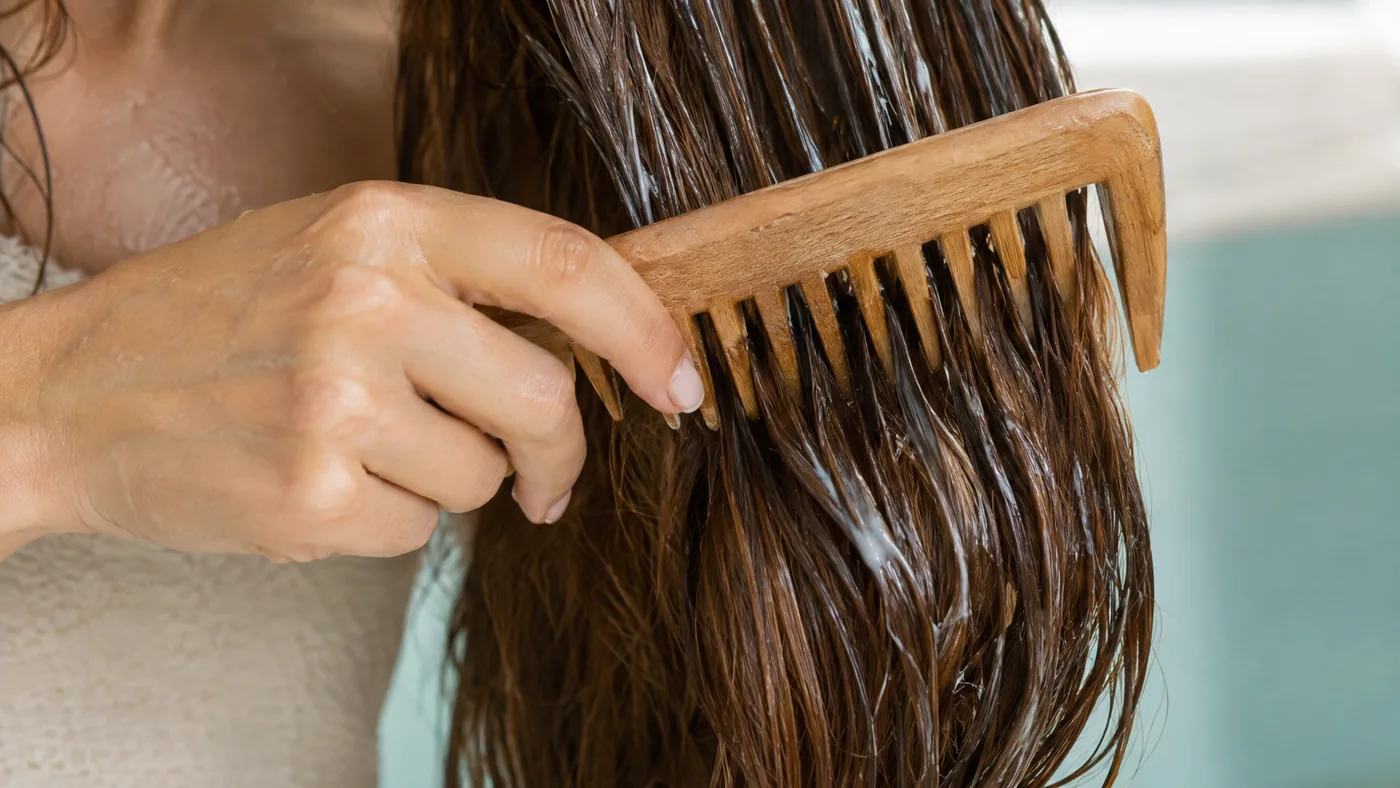
Afterward, handle wet hair with care. Hair is delicate when it is wet, so dermatologists suggest a wide-tooth comb rather than a brush for detangling.1
If you would like everything for wash day in one place, our Wash Ritual kit brings together the shampoo, conditioner and weekly mask.
A daily scalp moment
On the days between washes, give your scalp one small moment of attention. Spend a minute massaging in slow circles with your fingertips, or apply a leave-on scalp product if you use one. It is a calm way to begin or end the day, and it keeps your scalp part of the routine rather than an afterthought.
If you notice flakes, the American Academy of Dermatology notes that one common reason is not shampooing often enough.1
Skin: morning and night
Skin care can be just as simple. Dermatologists suggest washing your face once in the morning and once at night, as well as after heavy sweating, and no more than that.2
Morning
- Cleanse. Use a gentle, non-abrasive cleanser without alcohol, lukewarm water and your fingertips, then pat dry with a soft towel.2
- Moisturize. Apply moisturizer, especially if your skin feels dry, and be gentle around the delicate skin near your eyes.2
- Sunscreen. Finish with a broad-spectrum sunscreen, SPF 30 or higher, on skin not covered by clothing if you will be outside.3,4 When you are outdoors, reapply about every two hours, or after swimming or sweating.4
Night
- Cleanse. Repeat the same gentle cleanse at the end of the day.2
- Moisturize. Smooth on your night cream or moisturizer and let skin settle before bed.
That is the whole routine: three steps in the morning and two at night. If you like the idea of pairing skin care with a supplement, our Glow Kit combines the Daily Face Cream with Collagen Glow.
Supplements: consistency over complexity
If beauty supplements are part of your routine, the most useful thing you can do is take them consistently. Tie them to a meal you already eat every day. Breakfast works well for many people because it happens at roughly the same time and place each morning.
A few sensible guidelines apply to any supplement:5
- Do not take more than the label recommends.
- Tell your health care provider about every supplement you use.
- If you are going to have any type of surgery, check with your provider about the supplements you take.
Supplements are there to support a routine, not to replace the basics of sleep, balanced meals and sun protection.
How to make it stick
Knowing what to do is the easy part. Doing it on a busy Tuesday is where routines either settle in or fade. Research on habit formation offers some reassuring guidance.
Stack it onto something you already do
Researchers who study habits recommend linking a new behavior to a cue within an existing daily routine, at a time and place you encounter every day of the week.7 This approach is often called habit stacking. In practice, it might sound like this:
- After I brush my teeth in the morning, I cleanse, moisturize and apply sunscreen.
- When I sit down to breakfast, I take my supplement.
- After I take off my makeup at night, I cleanse and moisturize.
- On Sunday evening, my shower includes a hair mask.
Give it time
In a widely cited study in the European Journal of Social Psychology, 96 volunteers chose an eating, drinking or activity behavior to repeat daily in the same context, such as after breakfast, for 12 weeks.6 On average, the feeling that the behavior had become automatic leveled off after about 66 days.7 The range was wide, from 18 to 254 days, so if a step still takes effort after a few weeks, that is completely normal.6
Let go of the missed day
The same research found that missing one opportunity did not materially affect the habit formation process.6 If you skip a night, simply pick up again the next day.
Keep it to a few minutes
Simplicity helps here too. In the habit research, simple actions, such as drinking water, became automatic more quickly than more demanding ones.7 A routine of a few minutes is easier to repeat than one that takes half an hour. Keep products where you use them, line them up in the order you use them, and let go of any step you consistently skip.
The takeaway
A beautiful routine does not need to be complicated. Shampoo the scalp, condition after every wash, and add a mask once a week and a scrub now and then. Cleanse and moisturize morning and night, with sunscreen every morning. Take your supplement with breakfast, link each step to a habit you already have, and give it a couple of months. A few calm minutes a day, repeated, is what makes a routine your own.
This article is for general information and is not medical advice.
Sources
- Tips for healthy hair. American Academy of Dermatology. Source
- Face washing 101. American Academy of Dermatology. Source
- How to select a sunscreen. American Academy of Dermatology. Source
- Sunscreen FAQs. American Academy of Dermatology. Source
- Dietary Supplements. MedlinePlus, National Library of Medicine (NIH). Source
- How are habits formed: Modelling habit formation in the real world (Lally P, van Jaarsveld CHM, Potts HWW, Wardle J, 2010;40(6):998-1009). European Journal of Social Psychology. Source
- Making health habitual: the psychology of 'habit-formation' and general practice (Gardner B, Lally P, Wardle J, 2012;62(605):664-666). British Journal of General Practice (via PubMed Central, NIH). Source
For general information only, not medical advice. If you are pregnant, nursing, taking medication or have a medical condition, please check with your doctor before use.
Keep reading
Hair Shedding vs. Hair Loss: What Is Normal and What Is Not
Losing some hair every day is part of a healthy cycle, and knowing what normal looks like makes it easier to notice when something deserves a closer look.
Read →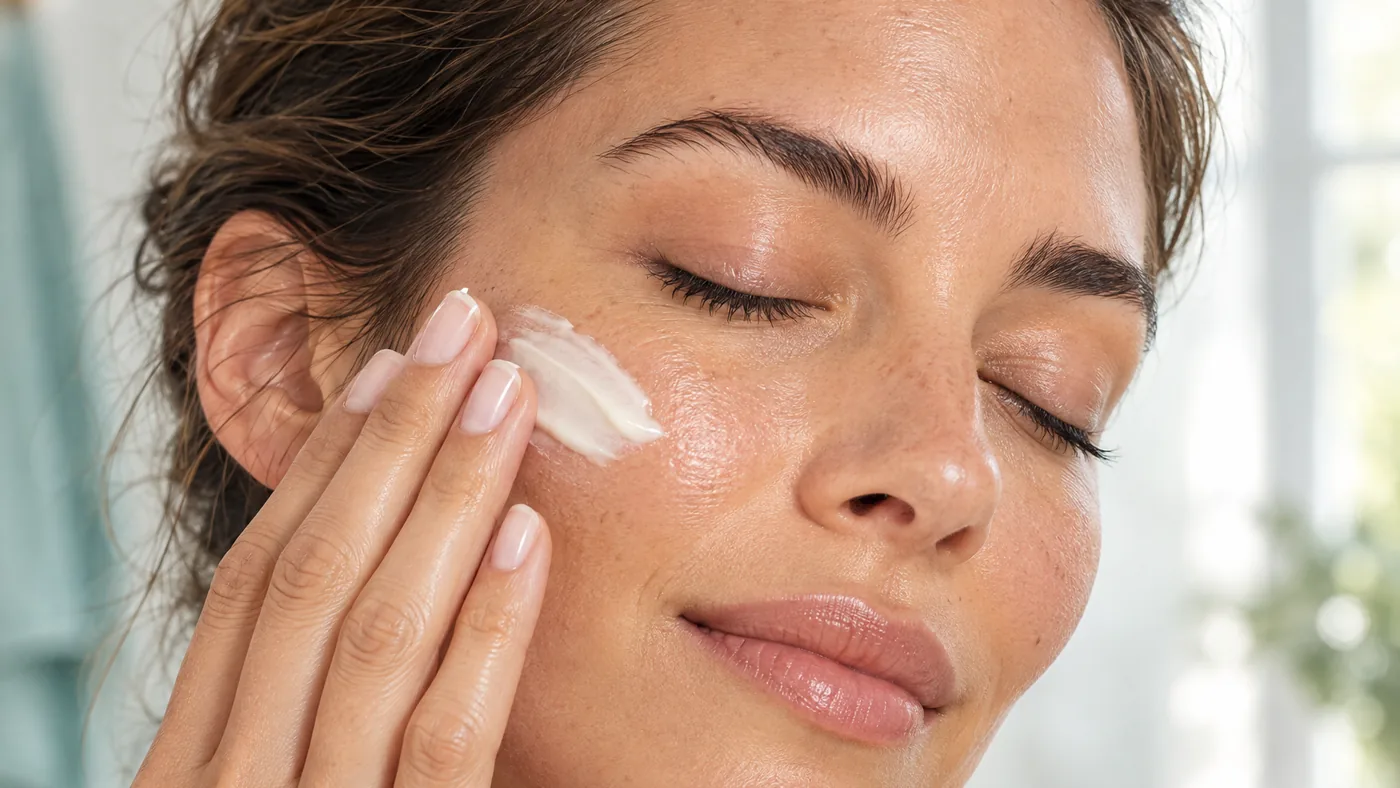
Your Skin Barrier, Explained: Signs, Stressors and Gentle Care
Your skin barrier is a thin wall of cells and lipids, and the kindest thing you can do for it is usually to do a little less, more gently.
Read →
Why Nails Split and Peel, and What Actually Helps
Peeling, splitting nails are common, and knowing what wears them down is the first step toward gentler care and realistic expectations.
Read →